


 |
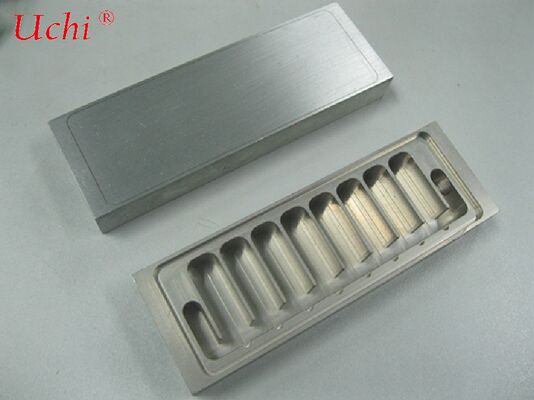
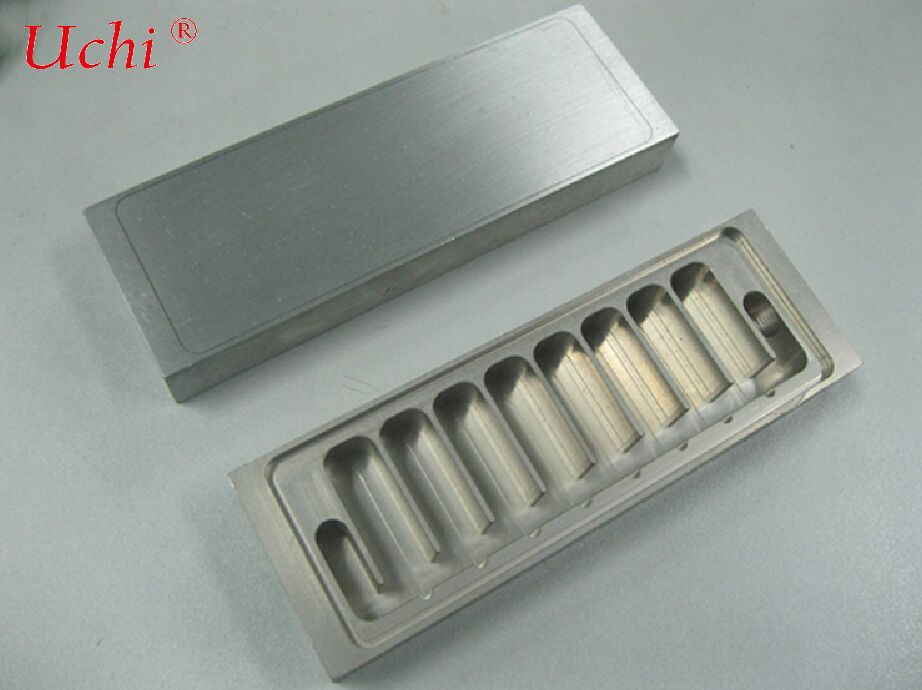
Une plaque de refroidissement liquide brasée est une dissipation de chaleur refroidie par liquide
Détails sur le produit:
| Lieu d'origine: | Dongguan, Guangdong, Chine |
| Nom de marque: | Uchi |
| Certification: | SMC |
| Numéro de modèle: | Dissipateur de chaleur |
Conditions de paiement et expédition:
| Quantité de commande min: | 100 pièces |
|---|---|
| Prix: | 1300-1500 dollars |
| Délai de livraison: | Non limité |
| Conditions de paiement: | T/T, paypal, Western Union, |
| Capacité d'approvisionnement: | 50000000 pièces par mois |
|
Détail Infomation |
|||
| Technologie de liaison: | FSW, conduite sous pression | Pression de fonctionnement maximale: | 10 barres |
|---|---|---|---|
| Processus supplémentaire: | Usinage CNC | Planéité des surfaces: | 0,1 mm |
| Puissance de la source de chaleur: | 24KW | Résistance à la corrosion: | Oui, avec un revêtement approprié |
| Taille du paquet unique: | 45X40X10cm | Dimensions: | Personnalisable |
| Technologie: | Cintrage de tuyaux | Taille de la boîte d'emballage: | 42,5*33*18CM |
| Indice IP: | IP65 | Traitement de surface: | Estampage + finition de surface |
| Nombre de voies navigables: | 6 voies navigables | ||
| Mettre en évidence: | plaque de refroidissement liquide brasée,plaque de dissipation thermique refroidie par liquide,plaque de refroidissement par dissipation de chaleur |
||
Description de produit
Plaque de refroidissement liquide brasée
Une plaque de refroidissement liquide brasée est une plaque de dissipation thermique refroidie par liquide formée par le soudage des plaques de couverture supérieure et inférieure et des canaux de circulation / ailettes internes dans un four sous vide à haute température, en utilisant le procédé de brasage. Elle offre d'excellentes performances d'étanchéité, des canaux de circulation précis, une faible résistance thermique et une haute résistance à la pression, ce qui en fait l'un des procédés les plus courants pour les plaques de refroidissement liquide haut de gamme.
I. Structure de base
Elle se compose généralement de trois couches :
- Plaque de couverture supérieure : assure l'étanchéité, les interfaces et la surface de montage
- Couche intermédiaire : plaque de canal de circulation / ailettes de turbulence / ailettes à broches
- Plaque de couverture inférieure : surface de liaison pour les composants générant de la chaleur
Les trois couches sont liées métallurgiquement en une unité intégrale par brasage.
II. Procédé principal : Brasage sous vide
- Formation de la tôle → revêtement / pré-positionnement du métal d'apport de brasage
- Empilage et positionnement → chargement dans le four de brasage sous vide
- Chauffage à haute température (environ 600 °C pour l'aluminium)
- Le métal d'apport de brasage fond, mouille et remplit les interstices
- Refroidissement et formation pour créer des soudures étanches de haute résistance
Avantages :
- Absence de porosité, de joints froids, étanchéité extrêmement élevée
- Haute résistance de soudure et bonne résistance à la corrosion
- Permet des conceptions de canaux de circulation complexes et précises
- Surface lisse, idéale pour la liaison de dispositifs de haute puissance
III. Caractéristiques clés
-
Haute efficacité de dissipation thermiqueDes micro-canaux, des ailettes à persiennes et des ailettes poreuses peuvent être intégrés dans la couche intermédiaire, offrant une grande surface d'échange thermique et une faible résistance thermique.
-
Forte résistance à la pressionPression nominale standard : 3 à 10 bars ; les versions haute pression dépassent 15 bars, adaptées à la charge rapide, au stockage d'énergie et aux moteurs électriques.
-
Étanchéité fiableStructure entièrement soudée avec un risque de fuite quasi nul, conforme aux tests d'étanchéité à l'hélium.
-
Excellente planéité de surfaceConvient à la dissipation thermique par montage en surface des IGBT, modules SiC, dispositifs de puissance, packs de batteries et autres composants planaires.
-
Principalement en alliage d'aluminiumUtilise couramment les alliages 3003, 5052, 6061 et autres, offrant une conception légère, une conductivité thermique élevée et un coût modéré.
IV. Conceptions courantes de canaux de circulation
- Canal de circulation en serpentin : structure simple, faible perte de charge
- Canaux multiples décalés / parallèles : transfert de chaleur uniforme
- Ailettes micro-canaux : pour les scénarios de densité de flux thermique élevée
- Réseau d'ailettes à broches : transfert de chaleur ultra-élevé, adapté aux GPU / lasers
V. Applications typiques
- Véhicules à énergie nouvelle : contrôleurs de moteur, OBC, convertisseurs DC-DC, modules SiC 800V
- Stockage d'énergie et charge rapide : convertisseurs de stockage d'énergie PCS, stations de charge ultra-rapide, dissipation thermique pour shunts de charge rapide
- Contrôle industriel et puissance : SVG, onduleurs photovoltaïques, onduleurs haute tension
- Optoélectronique et puissance de calcul : lasers, serveurs GPU, systèmes radar
VI. Comparaison avec d'autres plaques de refroidissement liquide
-
vs plaques de refroidissement liquide soudées par friction-malaxage:Le brasage est plus adapté aux canaux de circulation précis et à la densité de flux thermique élevée ; le soudage par friction est plus performant pour les applications de grande taille et à haut débit.
-
vs plaques de refroidissement liquide à profil extrudé:Les plaques brasées offrent une conception de canal de circulation plus flexible et une dissipation thermique plus forte, à un coût plus élevé.
-
vs plaques de refroidissement liquide à tubes intégrés:Meilleures performances de liaison et résistance thermique plus faible, idéales pour les dispositifs de haute puissance.
Vous voulez en savoir plus sur ce produit
